
Ashe Juniper Trimming and Removal Before Cedar Season
The trees most people here call cedar are Ashe junipers, and late fall is when many homeowners decide whether to trim them, thin them, or take some out.
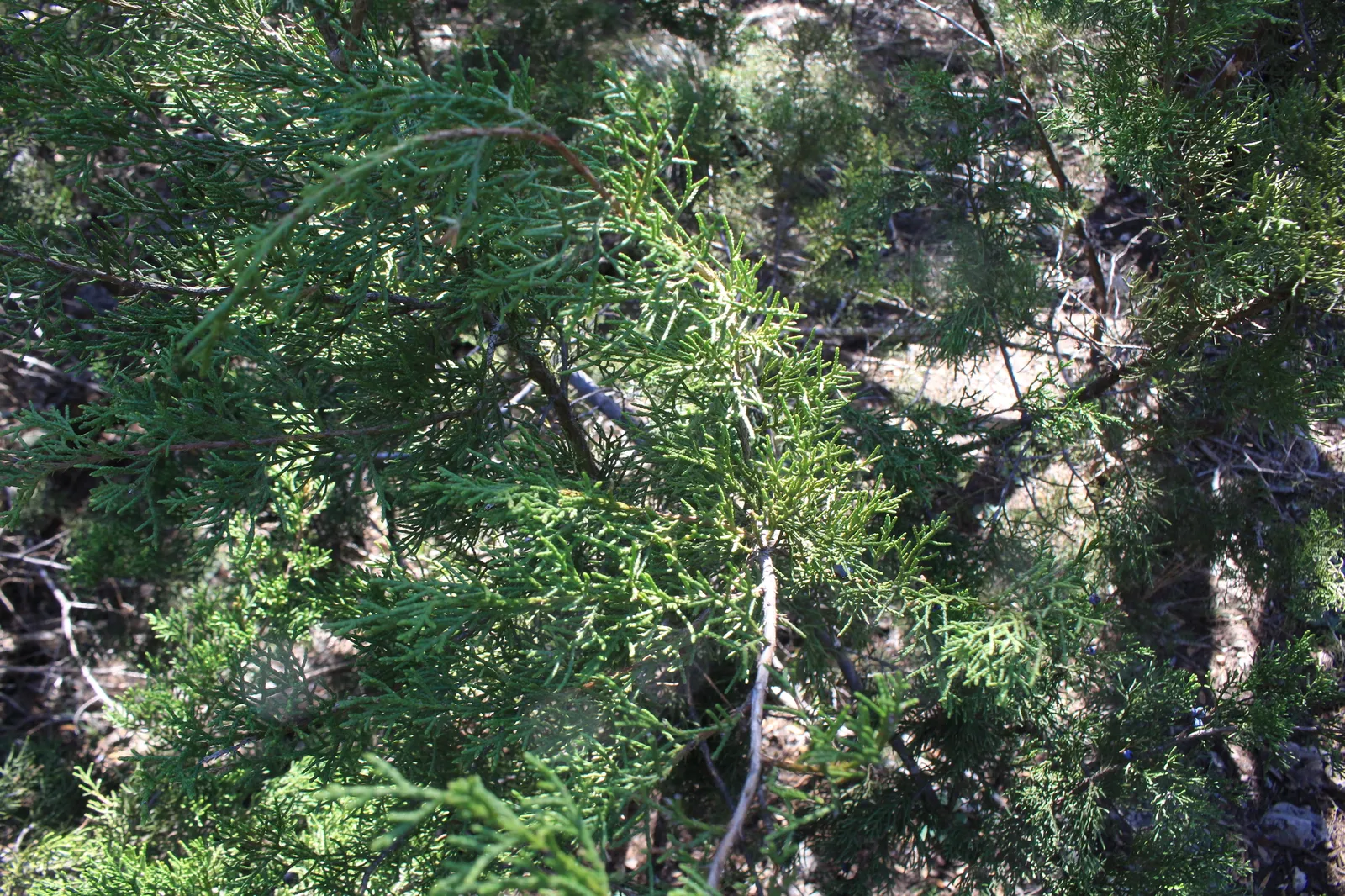
Ashe juniper, almost always called cedar in Central Texas, is one of the most common trees on Cedar Park lots. It is native, tough, and evergreen, and it grows well in the thin, rocky soil where many trees struggle. It is also the source of cedar fever, the allergy season that hits the region in winter when male trees release huge amounts of pollen. Late fall, before pollen season, is when many homeowners start deciding what to do about the junipers in their yards.
Only male junipers produce pollen. In fall and early winter, their branch tips develop small pollen cones that give the tree a rusty, brownish cast before they release. Female trees produce the small, blue, berry-like cones that birds eat, and they do not shed pollen. If allergies are the main concern, it helps to know which of your trees are which before deciding what to remove.
Be realistic about what removal can do. Juniper pollen travels long distances on the wind, so taking out the trees in one yard will not eliminate exposure in a region where junipers cover so much ground. It can reduce the heavy, close-range dose from a large male tree outside a bedroom window or over a patio, which some households find worthwhile. Trimming a male tree removes the pollen cones on the branches that are cut, but it does not stop the rest of the tree from producing pollen.
Allergies are not the only reason to manage junipers. Dense junipers are flammable, so clearing them back from the house and removing lower branches improves the defensible space around a home. Junipers crowding a fence, roof, or driveway, dead lower limbs, and thickets shading out oaks and other trees are all common reasons to trim or selectively remove them. Raising the canopy by removing lower limbs also opens sight lines and makes the ground under the tree usable again.
Junipers have value as well. They provide evergreen screening, shade, erosion control on slopes, and food and shelter for birds. Mature juniper and oak woodland in parts of the Hill Country is habitat for protected songbirds, so if you own acreage with large stands of mature junipers, check with your city or county about any rules that apply before clearing large areas. On most residential lots, selective work that keeps the healthiest trees gives the best balance.
Junipers in Cedar Park often grow among live oaks and other oaks, and work around them needs care. Oak wilt spreads when beetles reach fresh wounds on oaks, so avoid wounding oaks during the high-risk spring period, roughly February through June, and paint any oak wound right away in any season, as Texas oak wilt guidance recommends. Equipment used to clear junipers should also stay off oak root zones, where it compacts soil and tears roots.
Fall and early winter are a practical time for juniper work: the weather is cooler, the spring oak wilt window is months away, and trimming or removal can be finished before pollen season peaks. Removed juniper can be chipped, and the chips make durable mulch for paths and beds.
Lopez Landscaping & Tree trims, thins, and removes cedar trees for homeowners in Cedar Park and surrounding communities, and we handle lot clearing when larger areas need work. If you are deciding which junipers to keep and which to take out, ask for a free estimate and we will walk the property with you.
Deciding what to do with your cedar trees?
We trim, thin, and remove Ashe junipers for Cedar Park properties. Free estimates.