
Tree Care • 2026-09-14
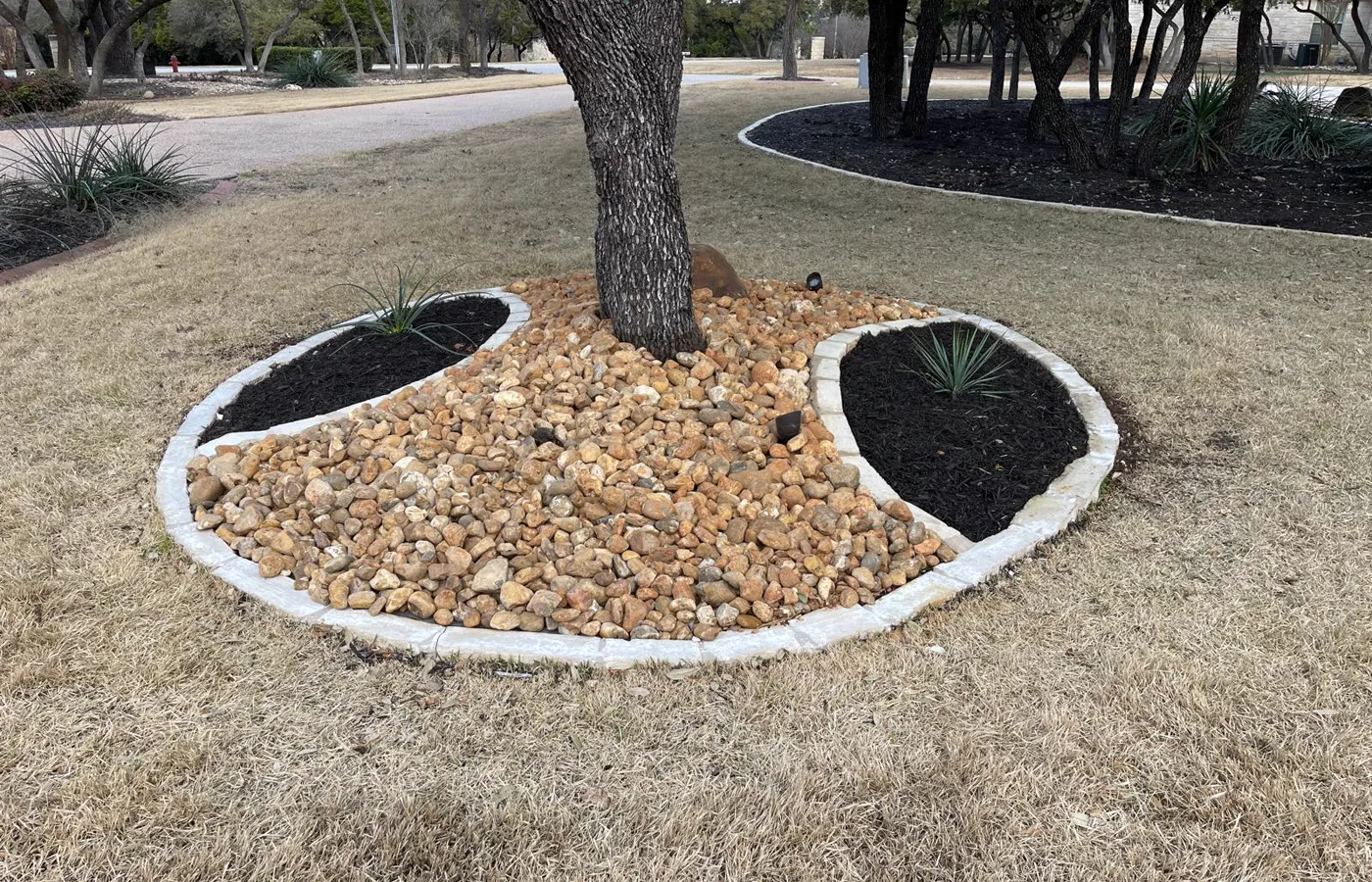
Safe Mulch Rings Around Trees in Cedar Park
A clean mulch ring can protect a tree and simplify lawn care, but depth, width, edging, and the space around the trunk all matter.
Helpful articles on landscaping, lawn care, tree trimming, tree removal, and keeping your property clean, safe, and visually strong year-round.
A clean mulch ring can protect a tree and simplify lawn care, but depth, width, edging, and the space around the trunk all matter.
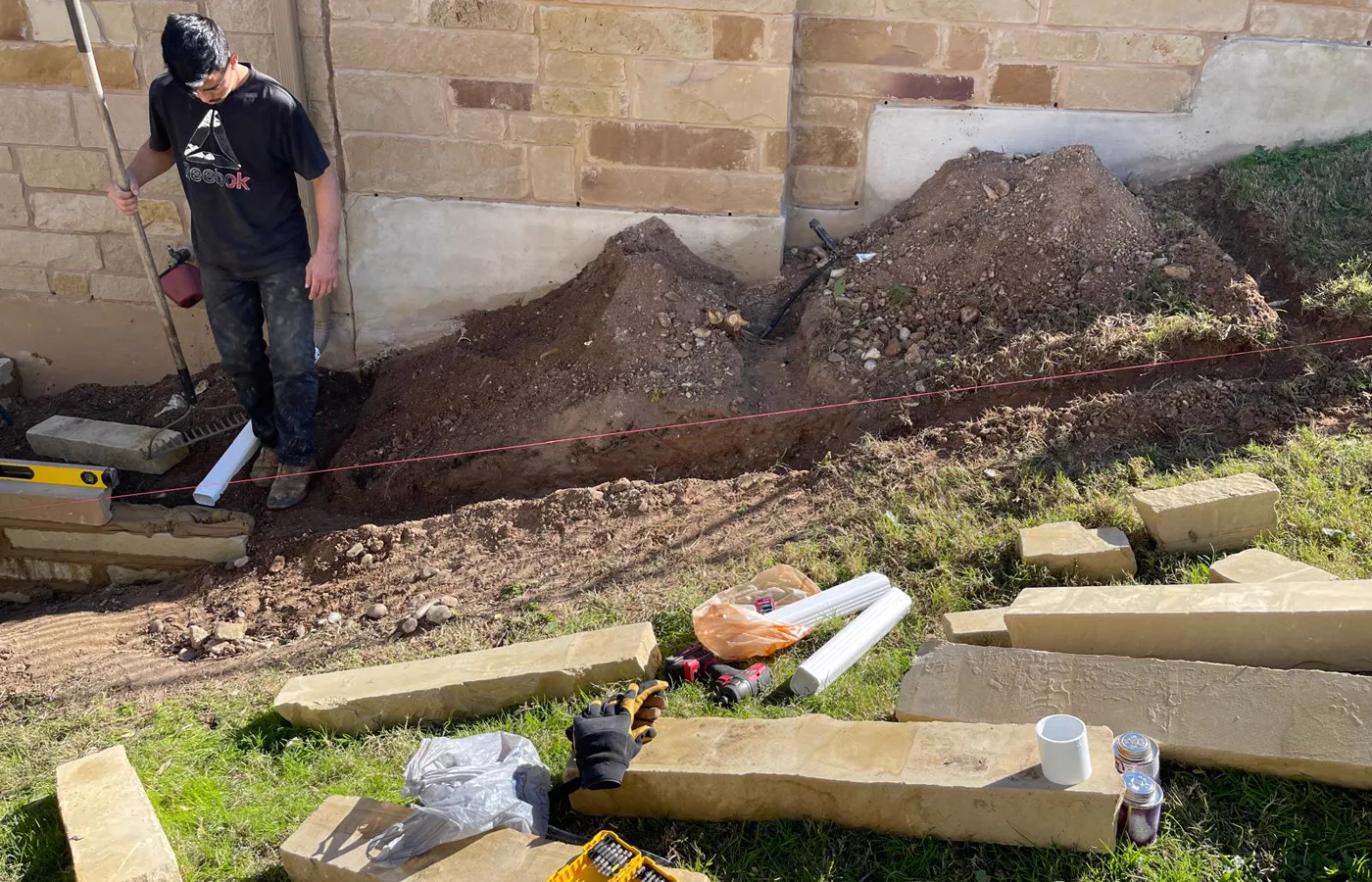
Both systems can move stormwater, but they solve different drainage patterns and create very different results in the landscape.

Bare lawn areas can come from compaction, shade, irrigation, traffic, insects, or soil problems. Identify the cause before adding seed or sod.

Live oak pruning should follow tree condition, weather, local disease risk, and the purpose of each cut—not a desire to thin the canopy quickly.
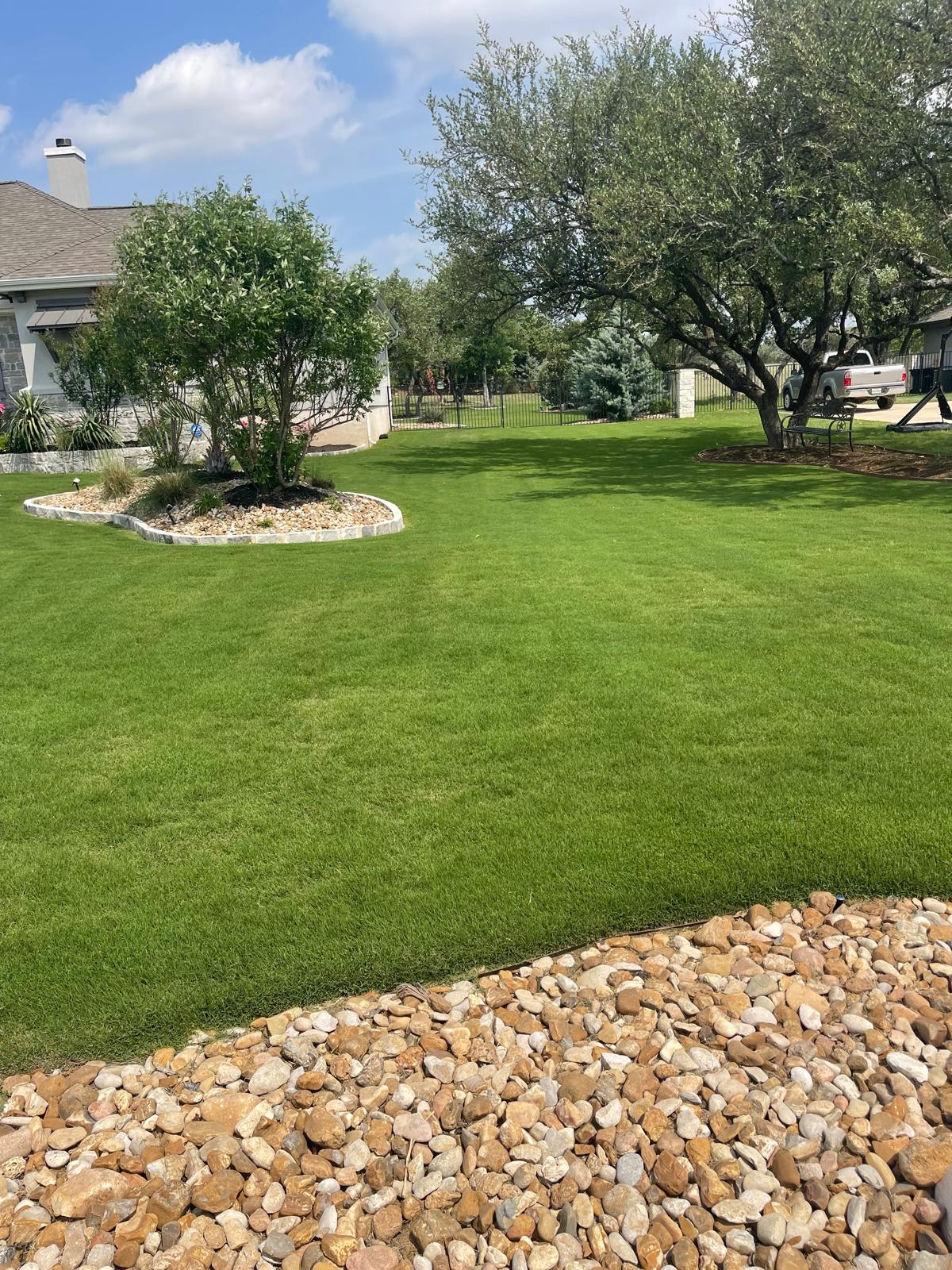
As summer's grip loosens, fall offers a crucial window for preparing your Cedar Park flower beds and overall landscape, setting the stage for vibrant autumn color and a stronger spring.
As Central Texas cools, adjusting your Cedar Park irrigation system is crucial to conserve water, prevent common fall lawn issues, and keep your landscape healthy through autumn.
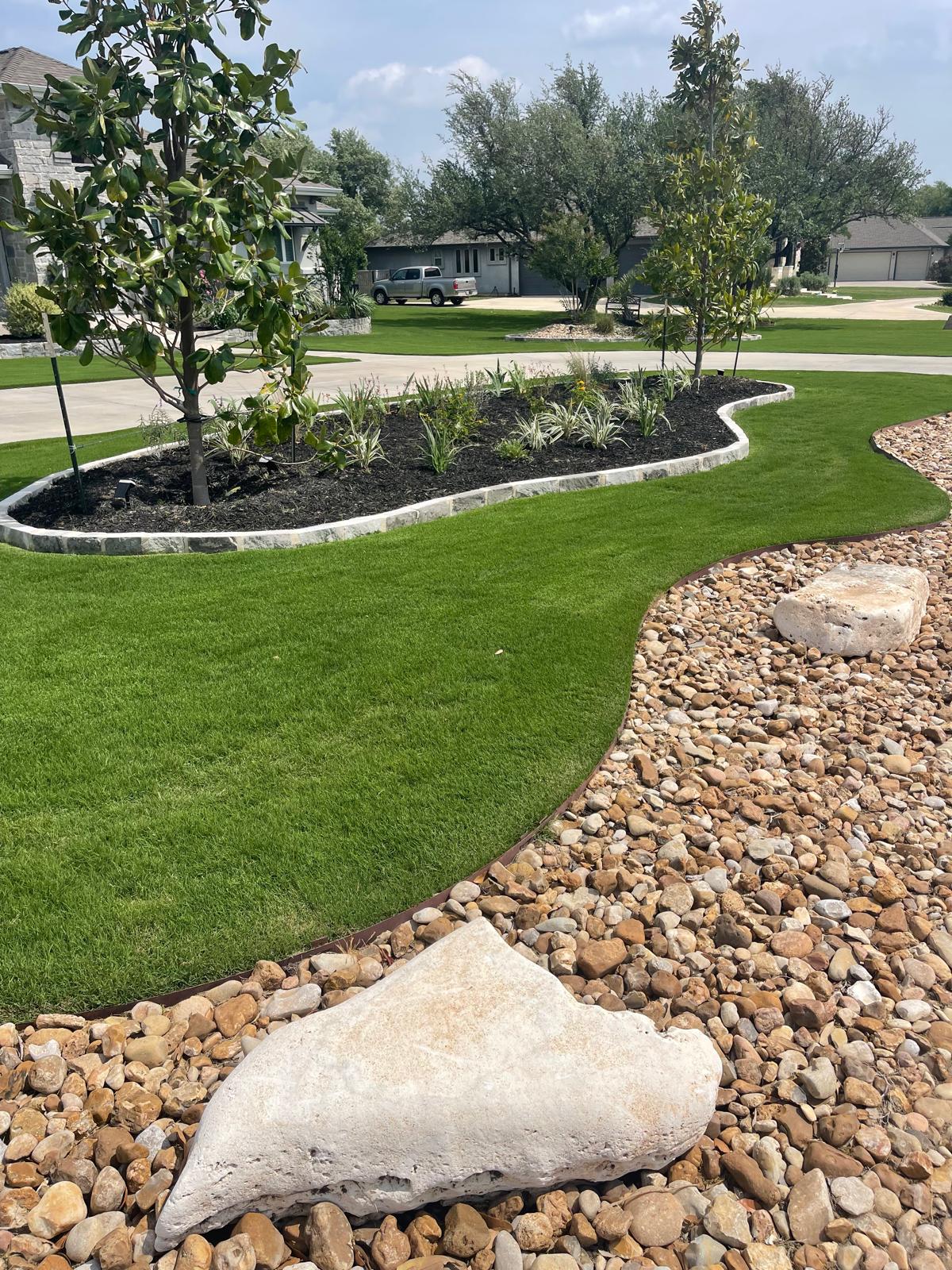
Native and adapted plants can bring lasting color to a Cedar Park yard while using less water and handling Central Texas heat.
Heat, drought, and summer storms can reveal weak limbs and tree stress. Check these warning signs before fall weather arrives.
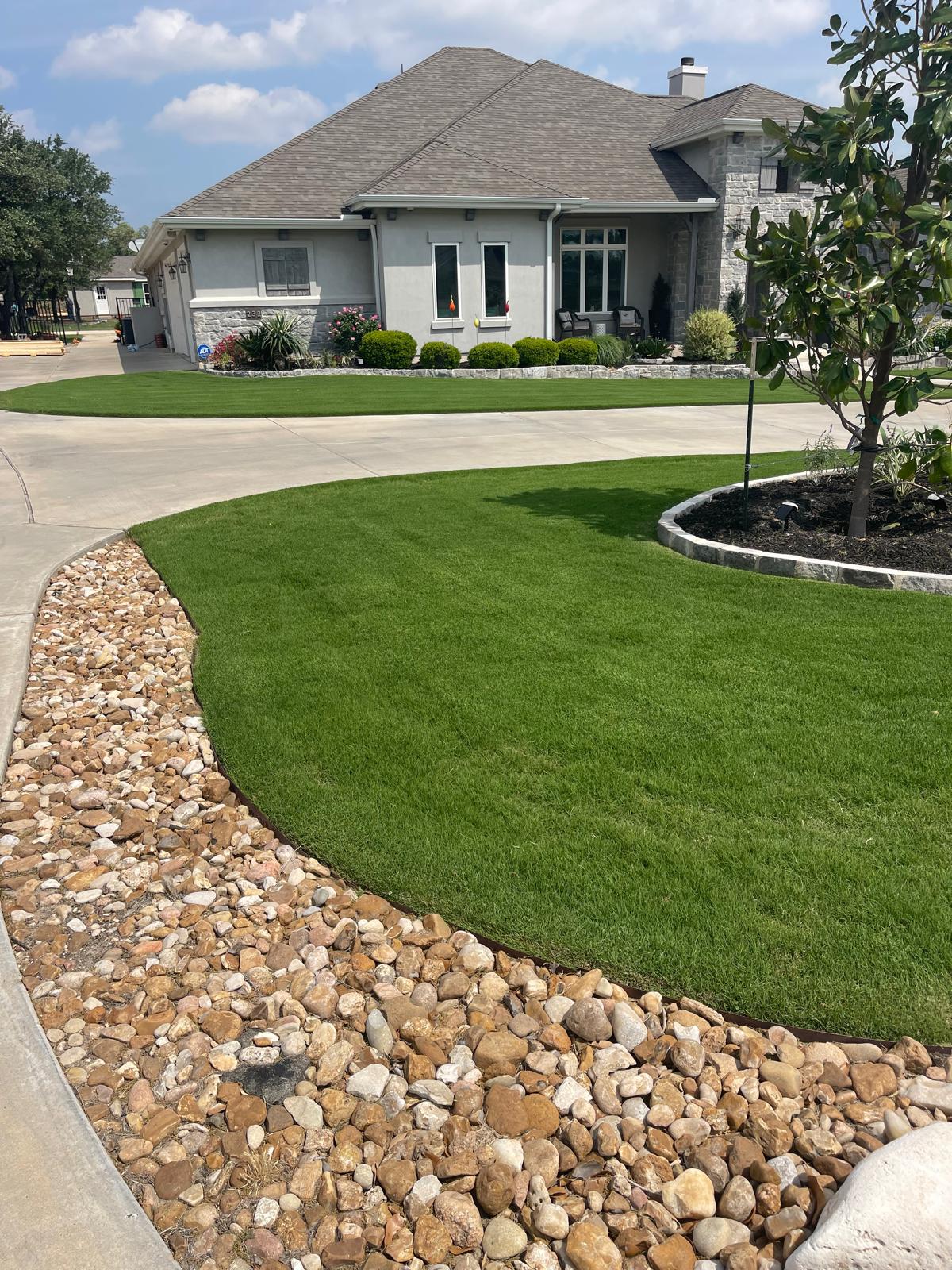
A Central Texas summer takes a real toll on a lawn. Early fall is the best window to help Cedar Park turf recover so it comes back strong next year.
Artificial turf promises a green, low-water lawn through the Central Texas heat, but it is not right for every yard. An honest look at the pros, cons, and costs.
Overseeding fills in a thin, patchy lawn and builds thicker turf, but timing and method are everything in Central Texas. Here is how and when to overseed a Cedar Park lawn.
An outdoor kitchen turns a Cedar Park backyard into a place to cook and entertain through the long Texas outdoor season. Here is what to plan for when building one.
A retaining wall controls a slope, prevents erosion, and creates usable space, but it has to be built to hold. Here is what goes into a retaining wall that lasts in Cedar Park.
Deer are a fact of life in much of Cedar Park, and they can devastate a landscape overnight. Here is how to design a yard that stays beautiful despite the local deer.
Heavy clay compacts hard in summer and chokes out grass roots. How to spot a compacted lawn, why core aeration helps, and the right way to do it in the heat.
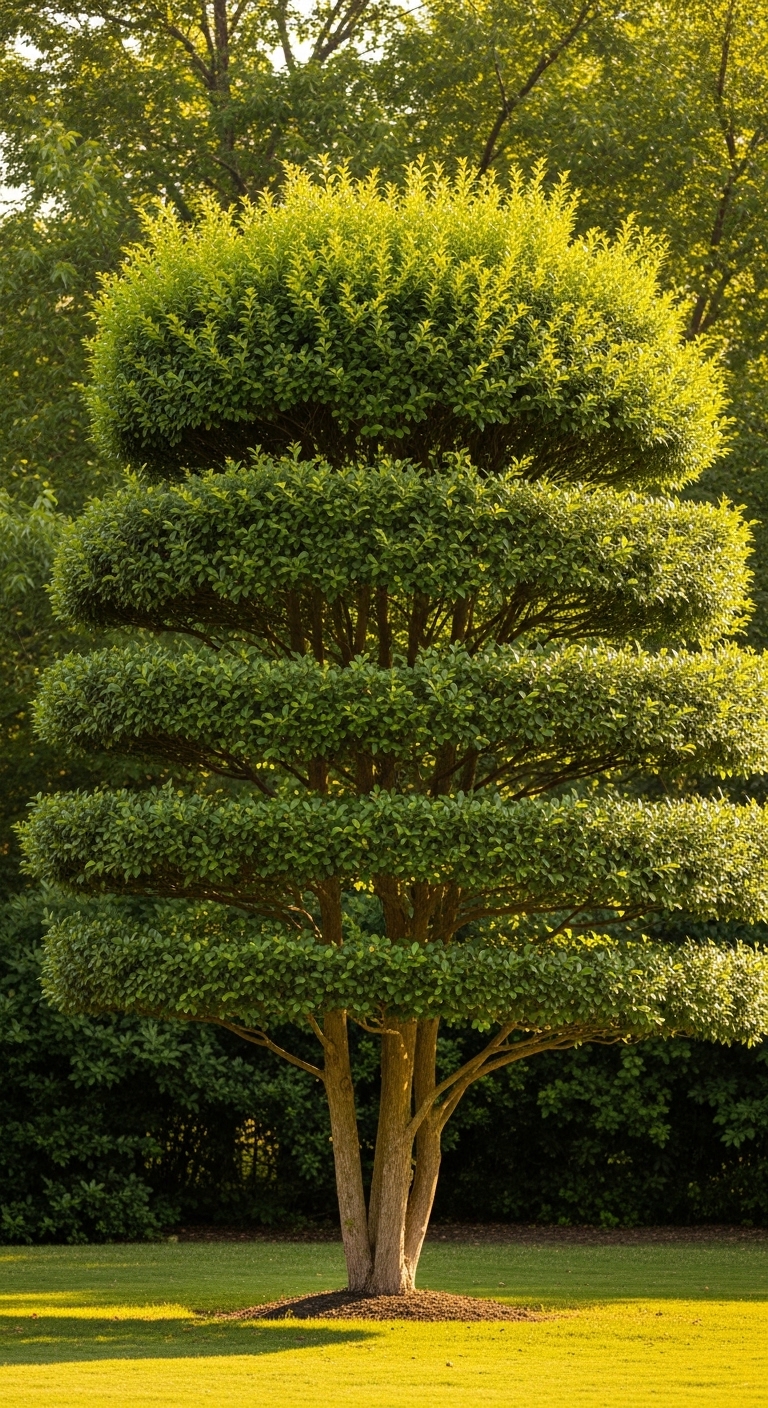
Yellow leaves with green veins usually mean iron chlorosis from our alkaline soil. What causes it, which trees are prone, and what actually corrects it.
Grubs kill a Cedar Park lawn from the roots up in mid-summer. The warning signs, the two-minute check that confirms them, and how to treat before dead patches spread.
The right shade tree cools a yard for decades. Which species thrive in our heat and clay, what to avoid, and how to plant so it survives the first summers.
Natural flagstone or manufactured pavers? How the two compare on look, cost, and upkeep — and the base prep both need to stay level on Cedar Park clay.
Standing water and damp overgrown beds breed mosquitoes. The drainage, planting, and cleanup changes that make a Cedar Park yard usable again in summer.
Xeriscaping keeps a Cedar Park yard looking good through the heat on a fraction of the water. Native plants, smart grouping, mulch, and efficient irrigation that actually work here.
Feed a Cedar Park lawn the wrong way in summer and you scorch it. What warm-season grasses need, how to time it around the heat, and the watering that makes feeding work.
Trees suffer in drought too, and the damage shows up a year later. How much, how often, and where to deep-water oaks and shade trees in Central Texas heat.
Mowing too short bakes a Cedar Park lawn in the heat. The right heights for St. Augustine, Bermuda, and Zoysia to hold moisture and resist drought.

New sod can root or crisp within days, and watering is the difference. A week-by-week schedule for establishing fresh sod in Central Texas heat.
Not every dead spot is a watering problem. How to spot brown patch and gray leaf spot, tell fungus apart from drought, and stop it from spreading.
When patches of a Cedar Park lawn turn brown in June, the cause is often chinch bugs, not drought. Here is how to identify them, tell them apart from missed watering, and control the damage in St. Augustine turf.
Pruning oaks during the warm months is one of the biggest oak wilt risks in Central Texas. Learn why Cedar Park oaks should be pruned in winter, and what to do when a cut genuinely cannot wait.
The right heat-tolerant annuals and perennials keep Cedar Park flower beds blooming through a Central Texas summer. Here are dependable choices and how to plant them for success.
Good landscape lighting makes a Cedar Park yard safer, more secure, and more inviting after dark. Learn the core techniques, where to place fixtures, and why low-voltage systems are the smart choice.
Late May is the right moment to service mulch beds in Cedar Park before summer heat arrives. Getting depth, edges, and bed prep right now reduces water loss and protects plant roots through the hottest months.
The watering schedule that worked in April stops working in late May. Here is how Cedar Park homeowners should adjust irrigation timing and frequency before summer heat takes over.
Some trim work is genuinely a Saturday job. Other jobs send people to the emergency room every year. Here is how to tell the difference in a Cedar Park yard.
Watering restrictions and triple-digit heat both arrive in Cedar Park around the same week. A tuned irrigation system is the difference between a yard that holds through August and a water bill that keeps climbing.
A few smart adjustments through June, July, and August are the difference between a lawn that holds its color and one that burns out by mid-July.
Cedar Park yards need design choices built for triple-digit heat, watering rules, and clay soil — native plants and smart layout do most of the work.
Trimming in May is not just about appearance. It is the last reliable window to remove weak limbs before summer storm season puts them to the test.
Turning a sprinkler system back on in May is not a one-button job. A careful startup is what stops leaks, dry zones, and high water bills later in the season.
Most foundation issues in Cedar Park start at the surface, not in the slab. Getting the grading and drainage right protects the structure for decades.
Spring storms in Central Texas push every tree on the property. The next morning's walk-through is the moment to catch the damage that matters before it becomes a hazard.
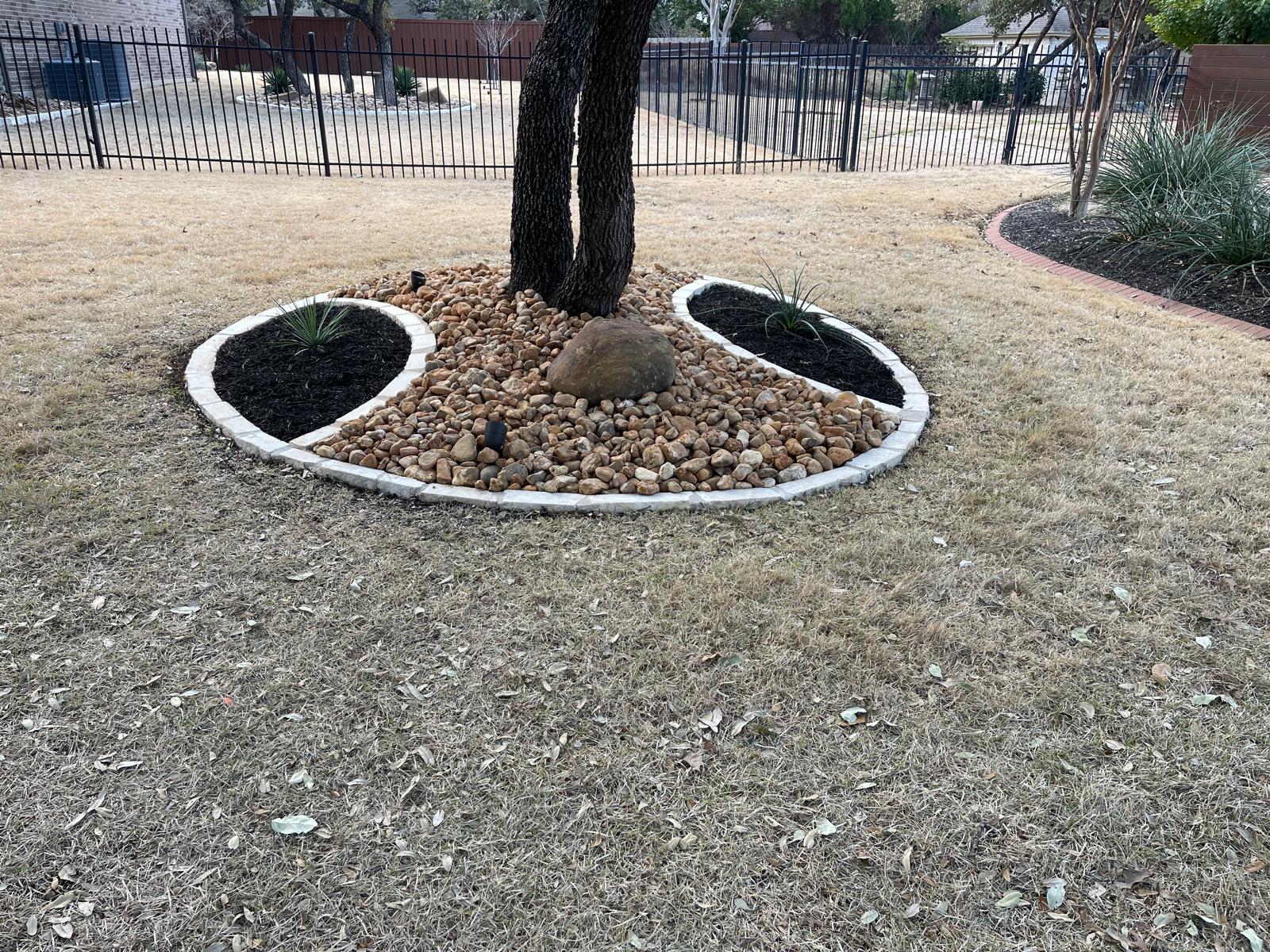
A cluttered yard is not just visual — it quietly causes water damage, pests, and safety risks around the home.
The three habits that make the biggest difference for a healthy lawn — done consistently, done right.
A practical guide on timing, depth, and why consistent mulching keeps beds clean and plants healthy.
Not every problem tree needs to come down. Knowing when trimming is enough and when removal is the safer choice saves property and budget.
Dead limbs, overgrowth, and poor branch structure can become hazards fast if tree maintenance is delayed too long.
Clean design, healthy lawn areas, and intentional plant layout can dramatically improve how a property looks and feels from the street.
A young tree planted in Cedar Park needs help for the first two to three years. The care given in those early seasons decides how the tree grows for the next fifty.
April is the most important mulch month of the year in Central Texas. Done right, it carries the beds through summer with less water and almost no weeding.
Native and Texas-adapted plants do the most work with the least intervention in Cedar Park yards. Here are the species that earn their place in nearly every design.
Most irrigation leaks in Cedar Park go unnoticed until the August water bill arrives. Catching them in March saves hundreds of dollars and prevents the dry spots that show up in summer.
A stone border can sharpen a yard's appearance for years, but only if it is installed correctly. Here is what separates a border that holds from one that drifts apart in a season.
A good spring cleanup is more than a leaf blow. It is the reset that decides how the rest of the growing season unfolds in the yard.
The early-March pre-emergent window in Central Texas is short, but missing it sets up the lawn for crabgrass and sandbur problems all summer. Here is how to time it right.
Cedar Park soil is a mix of caliche, clay, and limestone fragments that defeats a lot of landscaping plans. Working with it, instead of against it, is what makes a planting succeed.
Cedar Park lawns are mostly dormant in February, but the work done now is what decides how quickly the yard greens up in March. A few small habits in late winter set up a healthier spring.
Late winter is the cleanest window of the year to prune most Cedar Park shade trees. The leaves are off, the structure is visible, and disease pressure is lower than during the growing season.