
Soil Prep for Cedar Park Yards: Clay, Rock, and What Actually Grows
Cedar Park soil is a mix of caliche, clay, and limestone fragments that defeats a lot of landscaping plans. Working with it, instead of against it, is what makes a planting succeed.
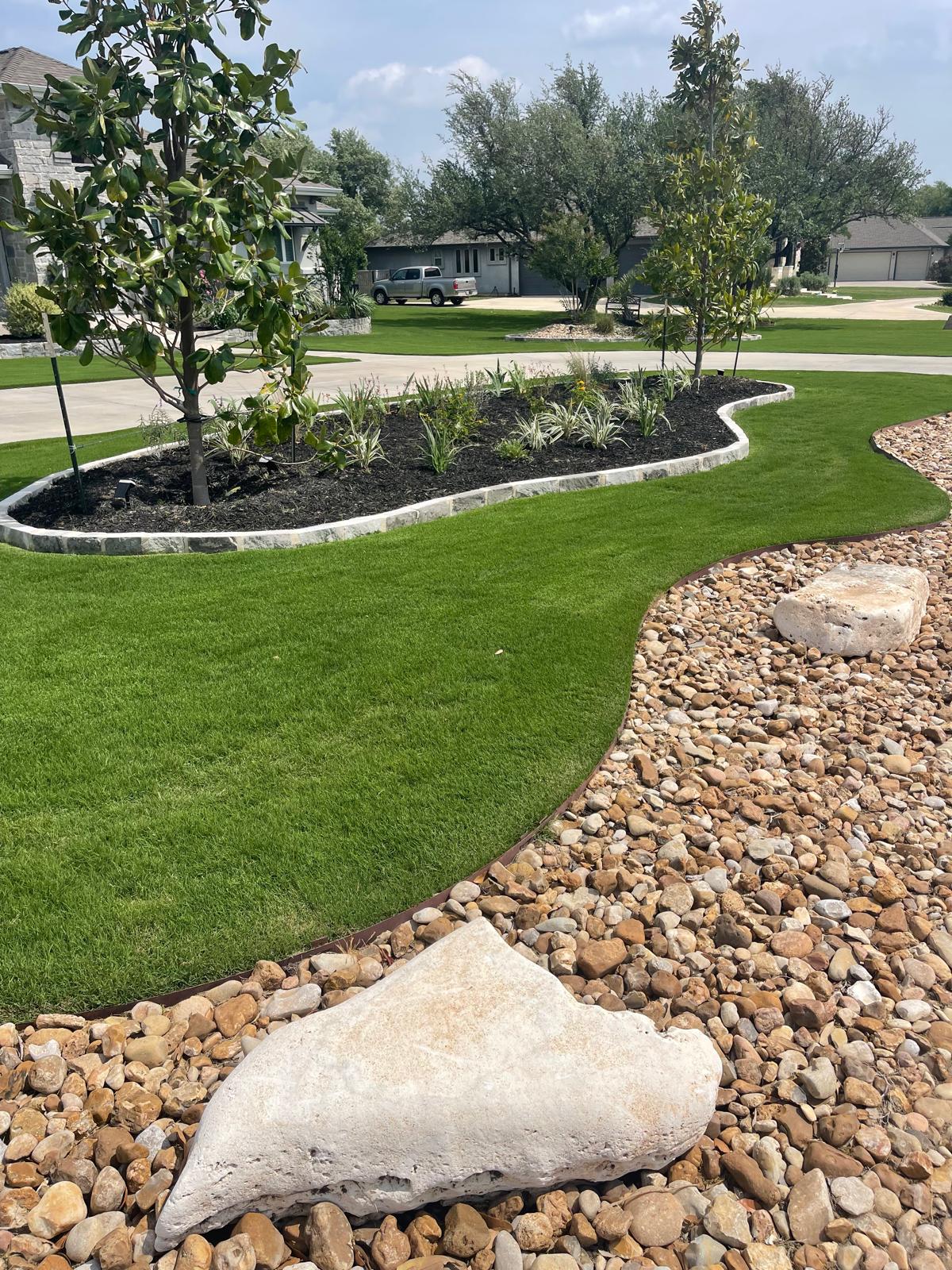
Anyone who has tried to dig a planting hole in a Cedar Park yard knows the soil here is different from what most plant tags assume. A few inches of topsoil sits over compacted clay and broken limestone, and water moves through that profile slowly. Plants that thrive in loose East Texas loam often struggle here without significant prep, while native and adapted species drop in and take off. Understanding the soil is the first step in any landscape design that is supposed to last more than two seasons.
Know what you are actually digging
Most lots in Cedar Park, Leander, and the surrounding communities sit on Edwards Plateau geology — caliche, calcareous clay, and weathered limestone fragments. The soil is alkaline, often above pH 8, and dries out fast on the surface while staying compacted underneath. The first hour of any new bed installation is spent understanding what is six, twelve, and eighteen inches down so the plant selection matches the reality.
Amend beds, do not replace soil
Trying to truck out the native soil and replace it with imported topsoil is one of the most common ways landscaping money gets wasted in Central Texas. The new soil ends up creating a bathtub in the original clay, water collects, and roots either drown or refuse to grow past the boundary. The better approach is to amend the top eight to twelve inches with quality compost, a small amount of expanded shale, and a balanced organic fertilizer. Roots adapt to the amended layer and then push down into the native profile gradually.
Pick plants the soil already wants
Native and adapted plants — Texas sage, lantana, Mexican feathergrass, salvia greggii, autumn sage, blackfoot daisy, red yucca, and dwarf yaupon — are the workhorses of Cedar Park landscapes because they evolved with this soil. They handle alkaline pH, tolerate dry stretches, and bounce back from the occasional hard freeze. Stacking the design around these species instead of fighting against the soil saves replacement costs every spring.
Drainage decides everything in clay
Bed shape, mulch depth, and slope direction matter more in Cedar Park than in most parts of the country because water that pools on clay for more than a few hours kills roots fast. Beds that crown slightly toward the middle, edges that direct overflow into the lawn instead of toward the foundation, and three inches of quality mulch all work together to keep moisture even without drowning the plants. A professional landscape team in Cedar Park designs around these realities from the first sketch.
Test small before committing the whole yard
Even with the right soil prep and the right plant list, a Cedar Park yard has microclimates. A bed on the south side of the house faces twice the heat load of a bed on the east side, and a corner shaded by a live oak holds twice the moisture of an open foundation bed. Trying one new species in a small grouping for a full year, watching how it handles the heat and the freezes, and then expanding what works is a cheaper learning curve than installing thirty plants of the wrong choice across the whole property. Lopez crews layer this kind of small-scale testing into multi-year landscape plans so each phase builds on what already works.
Lopez Landscaping & Tree Service handles this kind of work across Cedar Park, Leander, Liberty Hill, and the surrounding communities. We are bilingual, licensed, and dependable from the estimate through the final cleanup.
Looking for a dependable Cedar Park crew?
Lopez Landscaping & Tree Service handles landscaping, lawn care, tree work, and outdoor projects across Cedar Park and the surrounding area. Free estimates, bilingual service.