
Setting a Lawn Watering Schedule in Cedar Park for Late May and Summer
The watering schedule that kept the lawn healthy in April stops working in late May. Here is how Cedar Park homeowners should adjust irrigation timing and frequency before summer heat takes over.
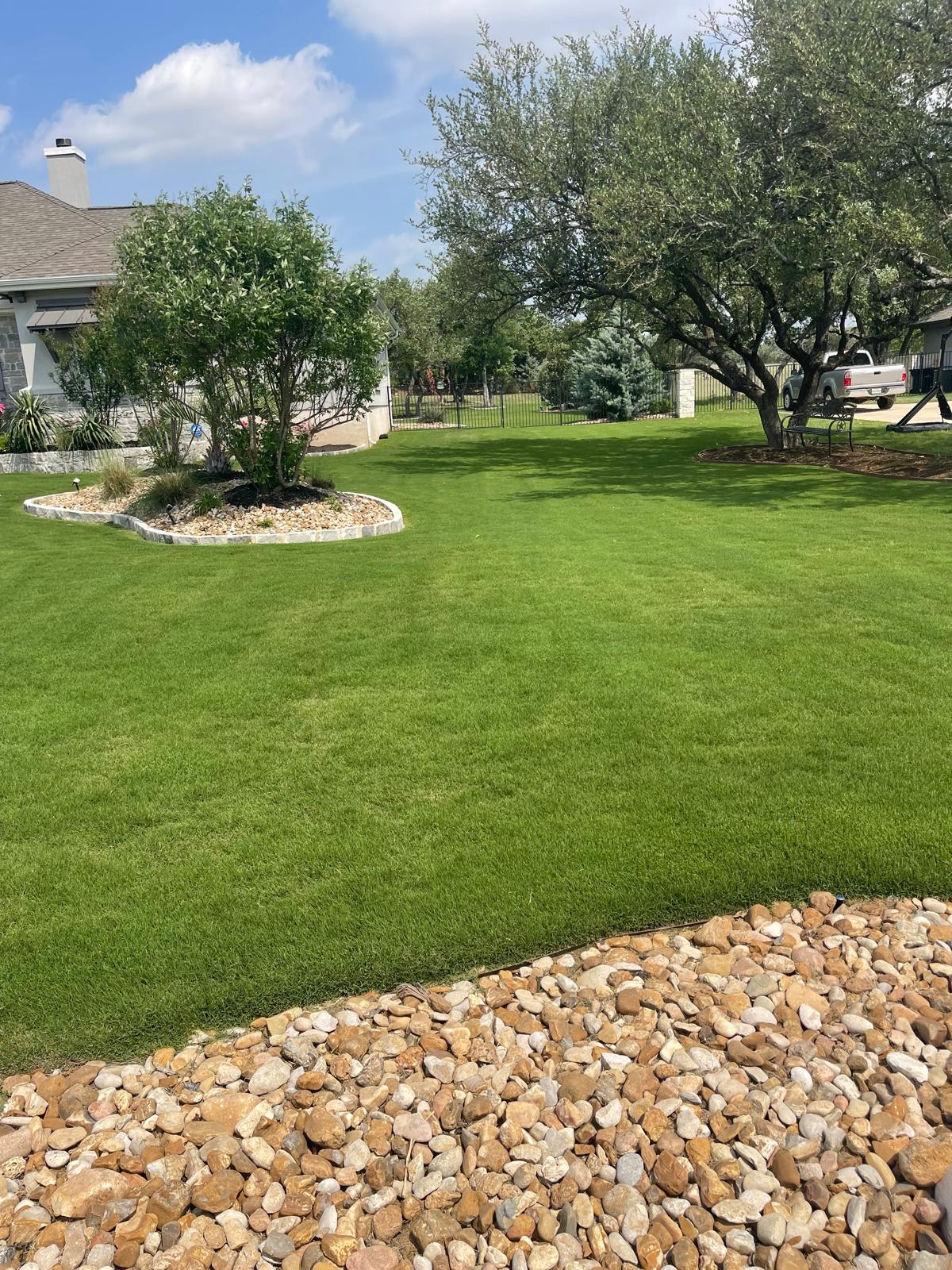
Most Cedar Park homeowners set a watering schedule in spring and leave it running until they notice a problem. That approach works in March and April when temperatures are moderate, evaporation is slow, and the lawn is actively recovering from winter. It stops working in late May, when daytime highs climb past ninety, soil dries out faster, and the same run time that was correct four weeks ago now either falls short or wastes water by running during the heat of the day. Adjusting the schedule before the lawn shows stress is almost always easier and cheaper than trying to recover a burned or patchy yard in July.
Shift all run times to early morning
Watering between 4 a.m. and 8 a.m. is the single most effective adjustment a Cedar Park homeowner can make heading into summer. Water applied at that hour soaks into the soil before the day heats up, which means less evaporation and more of the water actually reaching the root zone. Evening watering leaves the lawn wet overnight, which in Central Texas summer humidity encourages fungal disease. Midday watering evaporates before it penetrates deeply enough to do any real good. If an irrigation controller is still set to run at noon or in the early afternoon from a winter schedule, moving those start times to pre-dawn is the first priority.
Run time versus run frequency
A common mistake is adding more watering days when the lawn looks thirsty, when the better fix is longer, less frequent run cycles. Short, frequent watering keeps moisture near the surface and trains grass roots to stay shallow, which makes the lawn more vulnerable to heat and drought. Longer, less frequent cycles — enough water to penetrate four to six inches into the soil, followed by a day or two of drying — push roots deeper, where soil temperature stays more stable. Bermuda and St. Augustine, the two most common lawn grasses in Cedar Park, both respond better to this deep-and-infrequent pattern than to daily light watering. Check the soil two to three inches below the surface after a watering cycle: if it is still moist the next morning, the system does not need to run again that day.
Account for the city’s watering schedule restrictions
Cedar Park and the surrounding communities operate under water use guidelines that typically restrict outdoor irrigation to specific days based on address. Before adjusting run times and frequencies, confirm which days apply to your property and build the summer schedule around those windows. Running the system outside permitted hours wastes money on fines and does not change the underlying problem. An irrigation controller that is programmed correctly for the restriction schedule — with pre-dawn start times and the right zone run durations — handles the whole season automatically without needing manual intervention every time the temperature climbs.
Zone-by-zone adjustments matter
Not every part of a Cedar Park yard needs the same amount of water. South-facing beds and lawn areas in full sun dry out faster than shaded zones. Slopes lose water to runoff faster than flat areas. Clay-heavy patches in Central Texas soil absorb water more slowly and hold it longer than sandier spots. A properly programmed irrigation system runs each zone based on what that zone actually needs, not a single default time applied to the whole system. A homeowner who has never adjusted their zone run times individually is very likely running some zones too long and some not long enough. Cycling through each zone one at a time after a manual activation and watching how the water responds on the surface is the fastest way to find the ones that need adjustment.
When to call in a crew
If the system has head coverage gaps, broken emitters, pressure problems, or a controller that has lost its programming after a power outage, trying to fine-tune the schedule around equipment issues only goes so far. A quick irrigation inspection in late May, before summer demand peaks, catches those problems while they are inexpensive to fix. A clogged rotary head or a misaligned spray pattern that leaves a strip of lawn unwatered will show up as a brown streak by the end of June and take weeks to recover.
Lopez Landscaping & Tree Service handles irrigation system inspections, adjustments, and seasonal programming for residential properties across Cedar Park and the surrounding area. Bilingual service, free estimates, and dependable follow-through from the first call through the final walkthrough.
Need help with your irrigation system?
We inspect, adjust, and program irrigation systems for Cedar Park homeowners heading into summer. Free estimates and bilingual service.