
Stone Borders and Flower Bed Edging That Holds Up
A stone border can sharpen a yard's appearance for years, but only if it is installed correctly. Here is what separates a border that holds from one that drifts apart in a season.
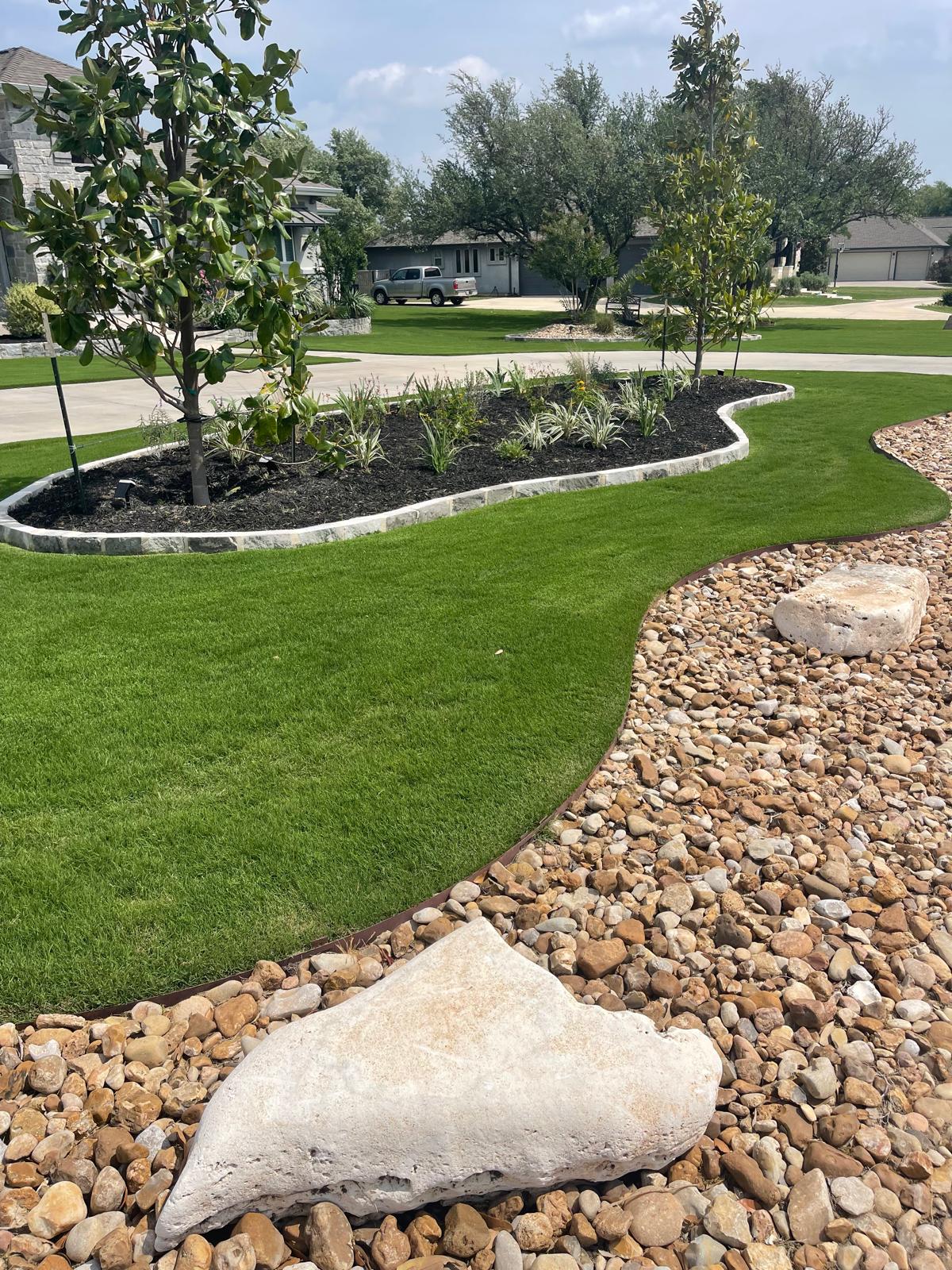
Stone bed borders are one of the most-requested upgrades on Cedar Park properties because they finish the look of a yard immediately and outlast almost every other material. A well-built border still looks sharp ten years later. A poorly built one tilts, separates, and lets mulch bleed into the lawn within a single season. The difference is almost entirely in the prep work and the choice of stone.
Choose stone that suits the property
Lueders limestone, chopped Oklahoma flagstone, granite cobble, and weathered moss boulders are the four most common border materials in Central Texas. Each carries a different read. Lueders gives a crisp, dressed look. Chopped flagstone reads as natural and irregular. Granite cobble suits formal beds. Moss boulders fit relaxed naturalized plantings. Mixing two styles on the same property reads as accidental — picking one and using it consistently reads as designed.
Trench before you set
A border set directly on top of the existing soil will tilt and shift within a year. The right approach is to trench three to four inches deep along the bed line, pack a base of crushed limestone or decomposed granite, and set the stones on the compacted base so the first row sits half below grade. That single step is what makes a border feel permanent.
Mortar versus dry-set
Dry-set borders flex with the soil, are easy to repair, and do not require an experienced mason. Mortared borders look more polished but crack if the soil settles unevenly, which it often does in Cedar Park clay. For most residential beds, dry-set is the more durable choice. Mortar makes sense for raised planters, retaining walls, and curved seat walls where structural rigidity is part of the design.
Plan the bed transition
The most overlooked detail in a stone border is what happens on the lawn side. A border that sits proud of the turf catches the mower blade and chips the stones. A border set flush with the lawn allows a quick mower-side pass without damage. The bed side should sit two to three inches taller so mulch stays contained. A professional Lopez crew sets the height precisely on both sides so the border works with the lawn instead of fighting it.
Curves, lines, and how the eye reads the yard
A stone border is also a design tool. Long straight runs read formal and feel architectural. Gentle sweeping curves feel natural and soften the front of the house. Tight curves and sharp corners read as fussy and rarely age well — they take more maintenance to keep clean and they fight against the natural sight lines from the street. Most successful Cedar Park front-yard borders use one or two long curves that follow the shape of the lot and avoid more than two changes of direction. Picking that line and committing to it produces a finished look that holds up year after year as the plants behind it mature.
Lopez Landscaping & Tree Service handles this kind of work across Cedar Park, Leander, Liberty Hill, and the surrounding communities. We are bilingual, licensed, and dependable from the estimate through the final cleanup.
Looking for a dependable Cedar Park crew?
Lopez Landscaping & Tree Service handles landscaping, lawn care, tree work, and outdoor projects across Cedar Park and the surrounding area. Free estimates, bilingual service.