
Retaining Walls for Sloped Cedar Park Yards: Function and Beauty
A retaining wall controls a slope, prevents erosion, and creates usable space, but it has to be built to hold. Here is what goes into a retaining wall that lasts in Cedar Park.
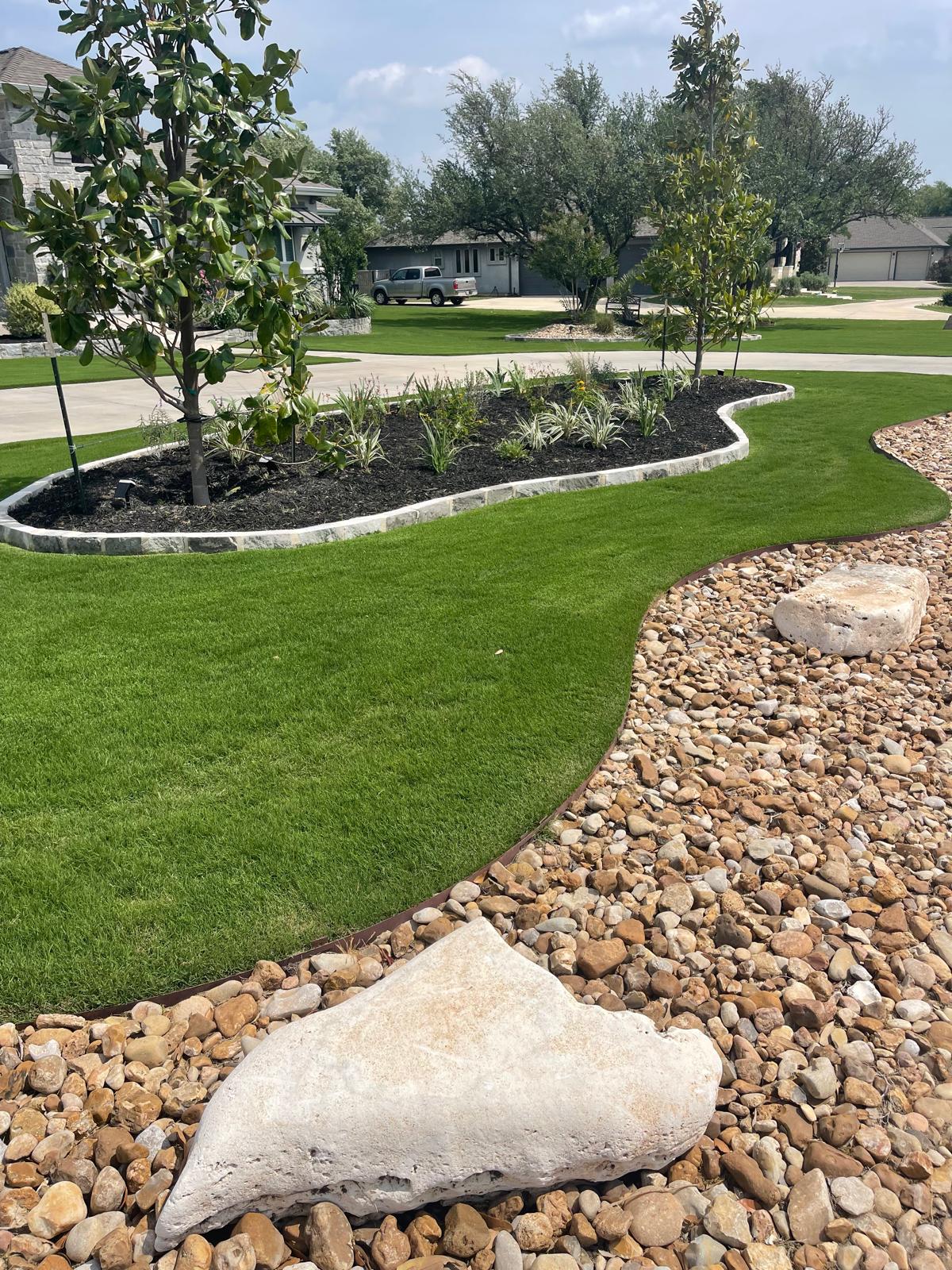
Many Cedar Park properties have sloped or uneven yards, and a well-built retaining wall is often the key to making that terrain both usable and attractive. A retaining wall holds back soil to control a slope, and in doing so it prevents erosion, creates level, usable space where there was an awkward grade, and adds structure and beauty to a landscape. But a retaining wall is also a structural element that has to hold back real weight and water pressure, and the difference between one that stands solid for decades and one that bulges, cracks, or fails within a few years comes down to how it is built. Understanding what goes into a proper retaining wall is worth it before you build one.
The purpose of a retaining wall goes well beyond looks, and its structural job is the point. On a sloped Cedar Park lot, a retaining wall can stop the erosion that washes soil away in our heavy downpours, turn an unusable slope into a level patio, garden bed, or play area, and manage how water moves across the property. These are real functional benefits that solve genuine problems with difficult terrain, and they are why a retaining wall is often the foundation of transforming a sloped yard into something enjoyable rather than just a decorative feature.
The single most important, and most overlooked, element of a lasting retaining wall is drainage. A retaining wall holds back not just soil but the water that soaks into that soil, and water pressure building up behind a wall is the leading cause of retaining wall failure, pushing walls to bulge, lean, and collapse. Proper drainage behind the wall, gravel backfill and a way for water to escape, relieves that pressure and is essential to a wall that lasts, especially in Central Texas where heavy rains saturate the soil. A beautiful wall built without proper drainage is a wall waiting to fail.
The foundation and construction determine whether the wall can carry its load over time. A retaining wall needs a solid, well-prepared base and correct construction for its height and the load it holds back, because it is resisting constant pressure from the soil behind it. Taller walls in particular carry serious loads and require appropriate engineering and building methods, and a wall built without adequate foundation or structure will move and fail no matter how good it looks initially. Matching the construction to the height and conditions is what makes a retaining wall structurally sound.
Material choice brings function and beauty together, since a retaining wall is both structural and highly visible. Options from natural stone to segmental concrete block to other materials each offer different looks and characteristics, and choosing one suited to the wall's purpose, the load, and the style of the home and landscape is part of a good design. A well-chosen material lets a retaining wall do its structural job while also serving as an attractive landscape feature, terracing a slope into garden beds or framing a patio, rather than looking like a purely utilitarian barrier.
A retaining wall is one of the most valuable improvements for a sloped Cedar Park yard, controlling erosion, creating usable space, and adding beauty, but only when it is built to hold, with proper drainage, a sound foundation, appropriate construction for its height, and well-chosen materials. Built carelessly, it becomes an expensive failure. Lopez Landscaping & Tree designs and builds retaining walls across Cedar Park that are engineered to last as well as to look good, with bilingual service and free estimates, so a difficult slope becomes one of the best features of your yard.
Need help with your Cedar Park yard?
We handle landscaping, lawn care, and tree service across Cedar Park and the surrounding area. Free estimates, bilingual service.