
Summer Lawn Fertilization That Works in Texas Heat
Fertilizing a lawn in the middle of a Central Texas summer is easy to get wrong. Feed it the wrong way and you can scorch the grass; feed it the right way and a Cedar Park lawn stays green and strong through the worst of the heat.
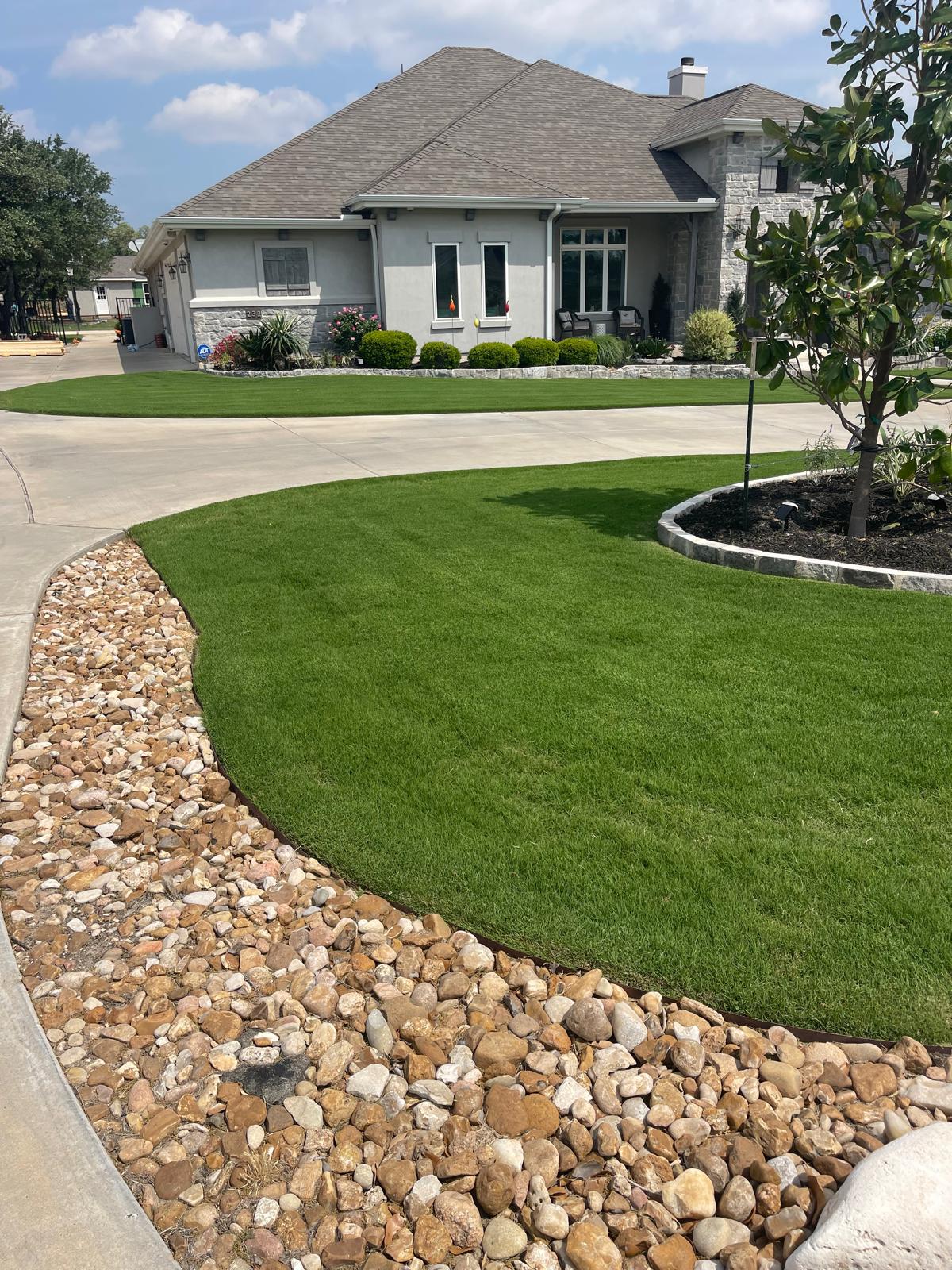
Summer is the season most homeowners worry about their lawn, and fertilizer feels like the obvious answer when the grass starts to look tired. It can be — but only if it is done with the heat in mind. The grasses we grow in Central Texas behave very differently in July than the cool-season lawns up north, and the fertilizing advice written for those climates can do real damage here. Done right, a summer feeding keeps a Cedar Park lawn dense, green, and able to crowd out weeds. Done wrong, it burns the lawn or pushes growth the grass cannot support in the heat.
Know your grass first
Almost every lawn around Cedar Park is a warm-season grass — St. Augustine, Bermuda, or Zoysia. These grasses are actively growing during the summer, which is exactly why summer feeding can work for them. That is the opposite of cool-season grasses, which go dormant and should never be fertilized in the heat. Because our lawns are warm-season, a properly timed summer feeding supports the growth they are already trying to put on, rather than forcing growth at the wrong time. The first step is simply knowing which grass you have, because it shapes everything else.
Feed before the worst heat, and lightly during it
The strongest summer feeding happens in late spring to early summer, before triple-digit days settle in. That is when warm-season grass is growing fastest and can use the nutrients well. Once the deep heat of mid and late summer arrives, the lawn is more about survival than vigorous growth, and heavy feeding then does more harm than good. If you do feed during peak heat, keep it light. A stressed lawn baking under the sun cannot use a heavy dose of fertilizer, and the excess simply burns the blades and roots.
Choose the right type of fertilizer
Nitrogen is the nutrient that drives green, leafy growth, but in summer too much of it at once is the main cause of fertilizer burn. A slow-release nitrogen fertilizer is the safer choice in the heat because it feeds the lawn gradually over weeks instead of dumping everything at once. That steady release supports color and density without the surge of growth that stresses a lawn already fighting the temperature. Following the label rate matters more in summer than at any other time — more is not better, and overapplying is the fastest way to damage the grass you are trying to help.
Water is what makes feeding work
Fertilizer and water go together, especially in the heat. Never apply fertilizer to a dry, drought-stressed lawn — the grass needs to be reasonably hydrated to take up the nutrients without burning. Watering the lawn the day before you feed, then watering again right after applying, moves the fertilizer off the blades and down into the soil where the roots can reach it. That post-application watering is not optional in a Texas summer; it is the step that prevents granules from sitting on hot blades and scorching them. Applying fertilizer in the cool of early morning, then watering it in, gives the best result.
Don't forget the basics around it
Fertilizer is only one part of a healthy summer lawn. Mowing at the right height for your grass, watering deeply but less often to build strong roots, and keeping the mower blade sharp all do as much for summer color as feeding does. A lawn that is mowed too short or watered shallowly will not respond well no matter how it is fertilized. The healthiest summer lawns come from getting all of these right together.
Summer fertilizing in Central Texas is about restraint and timing as much as nutrients. Lopez Landscaping & Tree Service handles lawn care for Cedar Park and the surrounding area with the heat in mind, so your lawn stays green and strong without getting burned.
Want a greener lawn through the summer?
We handle lawn care, fertilization, mowing, and maintenance built for Central Texas heat and soil. Healthy, even, and easy on the water.