
Chinch Bugs and Summer Lawn Pests in Cedar Park: How to Identify and Control Them
When patches of a Cedar Park lawn start turning yellow and then brown in the heat of June, most homeowners assume the cause is drought. Often the real culprit is the chinch bug, a tiny insect that thrives in hot, dry St. Augustine turf and does damage that looks exactly like missed watering.
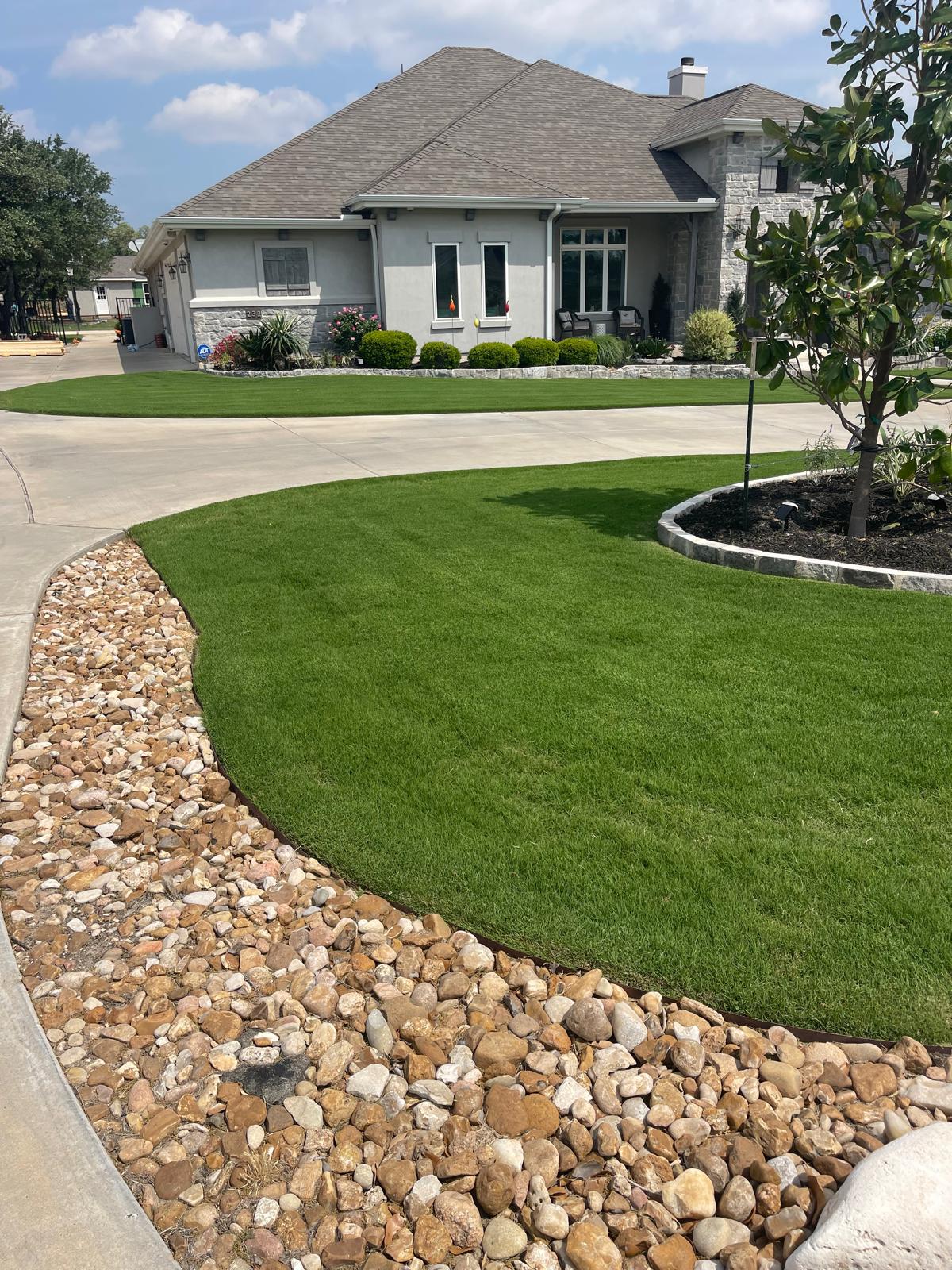
St. Augustine is the dominant warm-season turf in Cedar Park and across much of Central Texas, and it has one persistent summer enemy: the southern chinch bug. These insects feed on grass by piercing the blades and stems and draining the plant's fluids, while injecting a substance that blocks water movement inside the plant. The result is turf that yellows, then browns, then dies in expanding patches even when the soil underneath is being watered. By the time a homeowner notices the dead spots, a large population is usually already established, which is why learning to recognize the early signs matters.
Chinch bug damage versus drought stress
The two look almost identical from a distance, and that similarity is exactly why chinch bug infestations go untreated for weeks. The key difference is the pattern and the response to water. Drought stress shows up first in the highest, most sun-exposed parts of the lawn and along edges near concrete, and it improves within a day or two of a deep watering. Chinch bug damage tends to start in the sunniest, driest areas too, but it keeps expanding outward in irregular patches and does not green back up no matter how much you water. If you have been watering on schedule and the brown areas are still growing, suspect insects before you assume it is the irrigation.
How to confirm chinch bugs are present
Chinch bugs are small, only about an eighth of an inch long as adults, black with white wings folded across the back, and they move fast when disturbed. The young nymphs are even smaller and reddish-orange. The reliable way to find them is to look at the edge of a damaged area where dying grass meets healthy grass, since that is where the bugs are actively feeding and moving into fresh turf. Part the grass at the soil line and watch closely for movement, or use the float test: cut both ends out of a coffee can, push it a few inches into the soil at the damage margin, and fill it with water. Chinch bugs will float to the surface within a few minutes if they are present. Finding more than a handful in that small area confirms an active infestation worth treating.
Conditions that make Cedar Park lawns vulnerable
Chinch bugs love heat and they love thatch. The thick spongy layer of dead organic material that builds up at the base of St. Augustine gives them shelter and breeding ground, so lawns with heavy thatch and a history of over-fertilizing with quick-release nitrogen are the most prone to outbreaks. Drought-stressed turf is also more attractive to them and less able to recover from the feeding damage. The hottest, sunniest sections of a yard, often along south- and west-facing edges near driveways and sidewalks, are almost always where an infestation begins in Central Texas.
Controlling an infestation and preventing the next one
Treating chinch bugs requires targeting both the visibly damaged areas and the surrounding healthy turf where the bugs are spreading, since spot-treating only the dead center misses the active edge. Beyond direct treatment, the long-term defense is a healthy, properly maintained lawn: dethatching when the layer gets too thick, watering deeply but less frequently to encourage strong roots, avoiding excessive fast-release nitrogen, and mowing at the correct height for St. Augustine so the turf shades its own root zone. A vigorous, well-managed lawn tolerates and recovers from pest pressure far better than a stressed one, and catching the problem early in June keeps a few brown patches from becoming a lawn-wide loss by August.
Lopez Landscaping & Tree Service provides lawn care, turf health assessments, and seasonal maintenance for homes throughout Cedar Park and Central Texas. If your lawn is developing patches that water will not fix, we can help diagnose the cause and put it on the right track.
Brown patches that water will not fix?
We diagnose and treat summer lawn problems and keep Cedar Park turf healthy through the heat. Free estimates, bilingual service.